


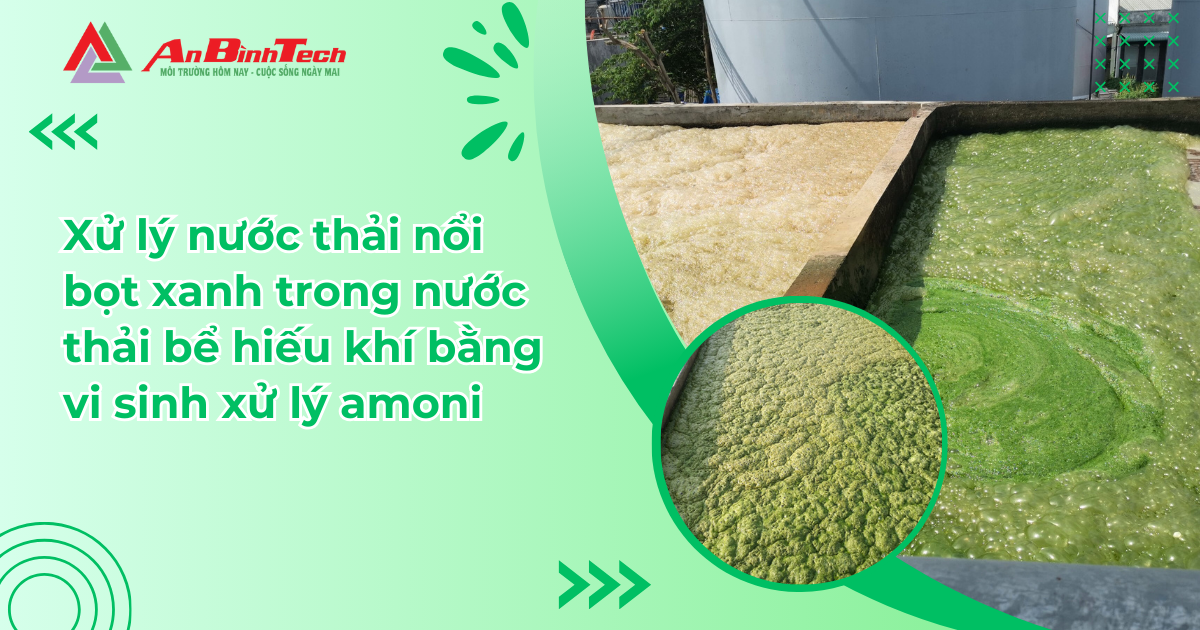
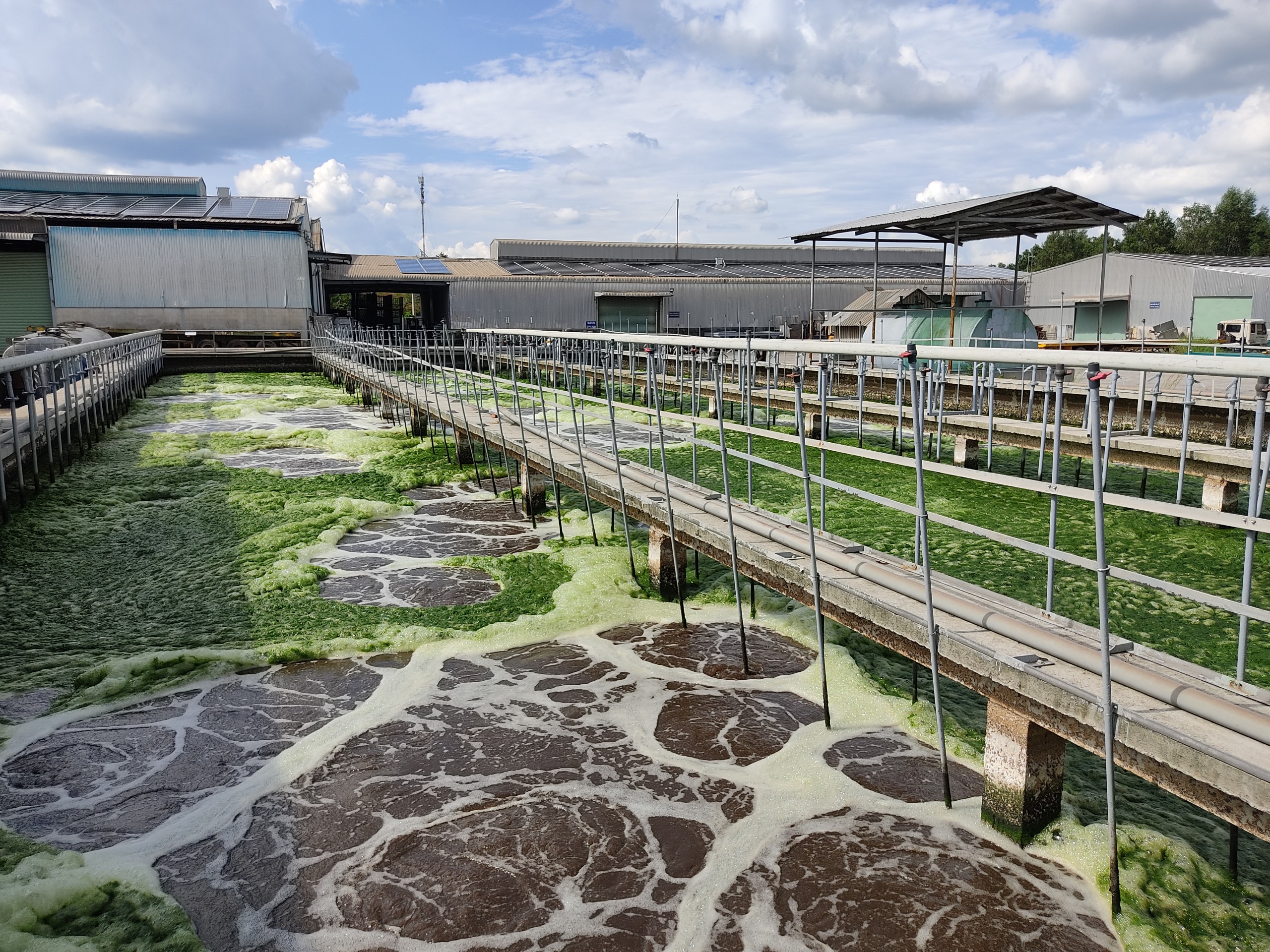
During the operation of the wastewater treatment system, green foam often occurs.
What is the cause of green foam in the aerobic tank? Does it have any impact on the wastewater treatment process?
This article will overview the causes and conditions of this phenomenon, and also mention some solutions to optimally and effectively solve the green foam phenomenon to avoid recurrence.

CAUSES OF GREEN FOAM IN THE AEROBIC TANK
The main factor causing green foam in wastewater
These green foams mostly come from blue-green algae. Blue-green algae (green algae) is a type of toxic algae that slows the growth of aquatic life. Blue-green algae have the ability to photosynthesize and have a structure closer to bacteria than algae, but the growth rate of blue-green algae is slower than other types of algae. In particular, blue-green algae have a higher ability to self-recover than other algae species.
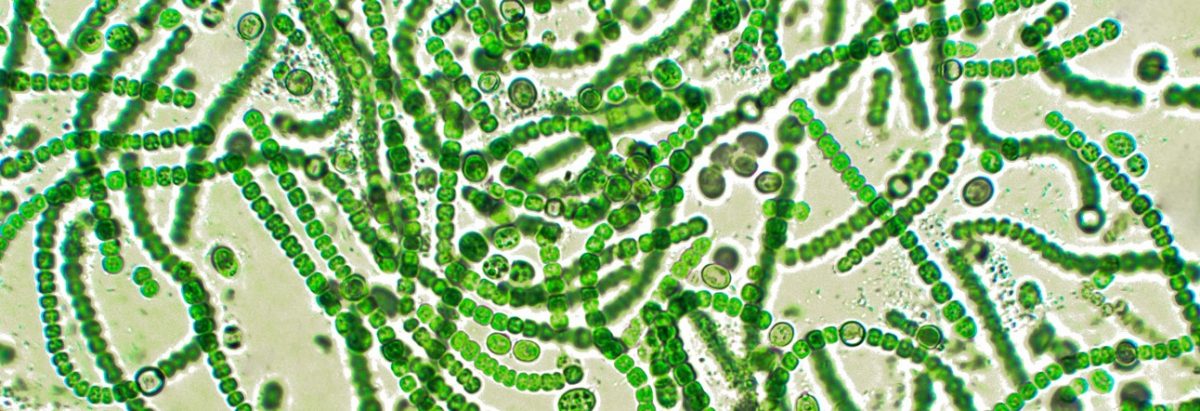
Blue-green algae is a type of toxic algae. When it blooms, it will form a thick layer of paint that covers the tank surface, causing a reduction in the amount of dissolved oxygen in the wastewater.
Blue-green algae also affects human health when exposed, causing allergies to the skin, eyes, etc. If eaten, it will cause poisoning, and in severe cases, it will affect the liver and nervous system.
Causes of blue-green algae growth
When this blue-green algae appears, Ammonium and nitrogen will definitely be high in the aerobic tank. Because production wastewater contains many proteins and organic compounds that produce Nitrogen and Phosphorus, there needs to be a solution to enhance the nitrification process for aerobic tanks.
The causes of high Ammonium and nitrogen content in aerobic tank wastewater include:
- Due to the sudden increase in the amount of wastewater flowing into the aerobic tank
- High concentration of protein and organic matter in wastewater
- The microflora in the aerobic tank is overloaded and unable to handle it
SOLUTIONS FOR TREATMENT OF GREEN FOAM IN WASTEWATER
To treat algae in wastewater, chemical or biological methods can be used. However, using chemicals in wastewater to kill green algae will lead to the destruction of the microbiological system in wastewater, affecting the processing and decomposition of organic matter.
Therefore, the most effective and environmentally friendly solution is to use microbial products to reduce nitrogen and ammonium concentrations in wastewater, quickly treat organic matter to cut off the algae's nutrient source, causing algae to form. cannot thrive and gradually die.
Some benefits when using microorganisms to treat nitrogen and ammonium:
- Does not cause mass algae death, which increases pollution levels
- Add microorganisms that specialize in wastewater treatment and nitrogen and ammonium treatment
- Limit recurrence
- Quickly decomposes waste in water
- Reduce odors in wastewater
USING MICROBIOLOGIES TO TREAT NITROGEN AND AMMONIUM – ENVICLEAN AMO TO HANDLE THE SITUATION OF BLUE FOAMY SEWWATER FLOATING
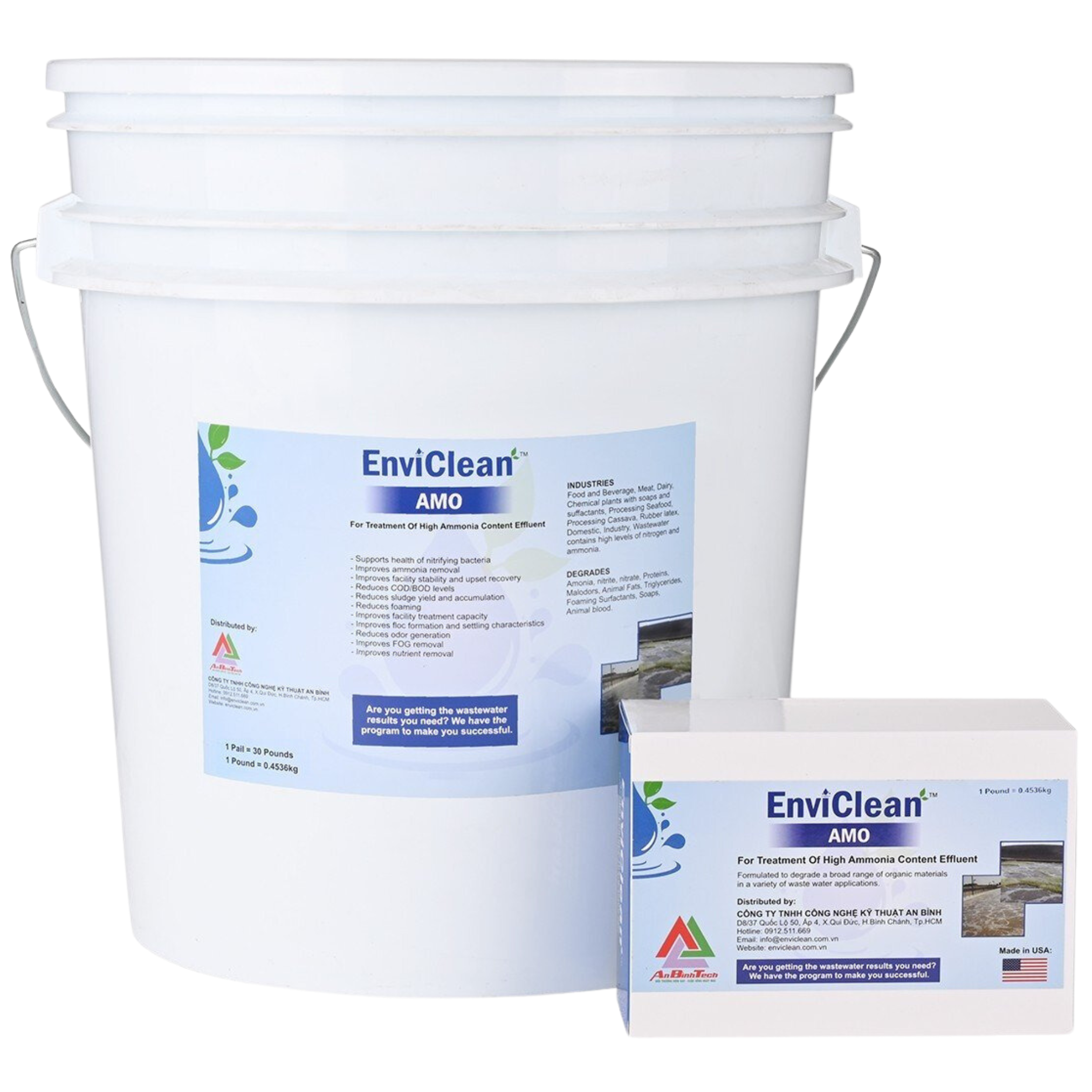
EnviClean AMO – microorganisms that treat ammonium and nitrogen is a product containing special microorganisms to remove total Nitrogen, Ammonium and odor-causing organic impurities from wastewater. This product combines strains of Bacillus, Nitrosomonas, Nitrobacter to create optimal activity and enzymes with higher Ammonium and Nitrogen treatment efficiency than other products on the market.
EnviClean AMO – microorganisms that treat ammonium and nitrogen Easily adaptable in different environments and helps reduce odor and ammonia concentration in wastewater to acceptable levels.
ADVANTAGES OF MICROBIOLOGICAL TREATMENT OF AMMONIUM AND NITO
- Enhance the nitrification process taking place in the aerobic tank and the denitrification process in the anoxic tank.
- Improve and restore the system effectively.
- Overcome the phenomenon of dead microorganisms, shock, and sludge not settling due to too high Nitrogen content.
- Reduce BOD/COD.
- Reduces ammonia odor in wastewater treatment systems.
- Reduce costs: operations and labor.
USER MANUAL
Dosage is based on optimization level, pollutant load, waste source properties and different projects. Standard dosage is as follows:
| Flow | First month | Second month onwards |
| 0 – 10 m3 | 2 Pounds/Week | 1 Pound/Week |
| < 50 m3 | 4 Pounds/Week | 2 Pounds/Week |
| < 100 m3 | 6 Pounds/Week | 3 Pounds/Week |
| < 500 m3 | 8 Pounds/Week | 4 Pounds/Week |
| < 1000 m3 | 12 Pounds/Week | 6 Pounds/Week |
| < 3000 m3 | 20 Pounds/Week | 10 Pounds/Week |
Recommended: To achieve optimal results, you should incubate the mass for 24 - 36 hours before putting it into the wastewater treatment system.
——————————————————————————————————————–
AN BINH ENVIRONMENTAL TECHNICAL TECHNOLOGY COMPANY LIMITED
Office address: 63/48 Street 9, Quarter 3, Truong Tho Ward, Thu Duc City, Ho Chi Minh City, Vietnam
Hotline: 0912.511.669.
Email: [email protected]
Fanpage: https://www.facebook.com/anbinh.eviclean